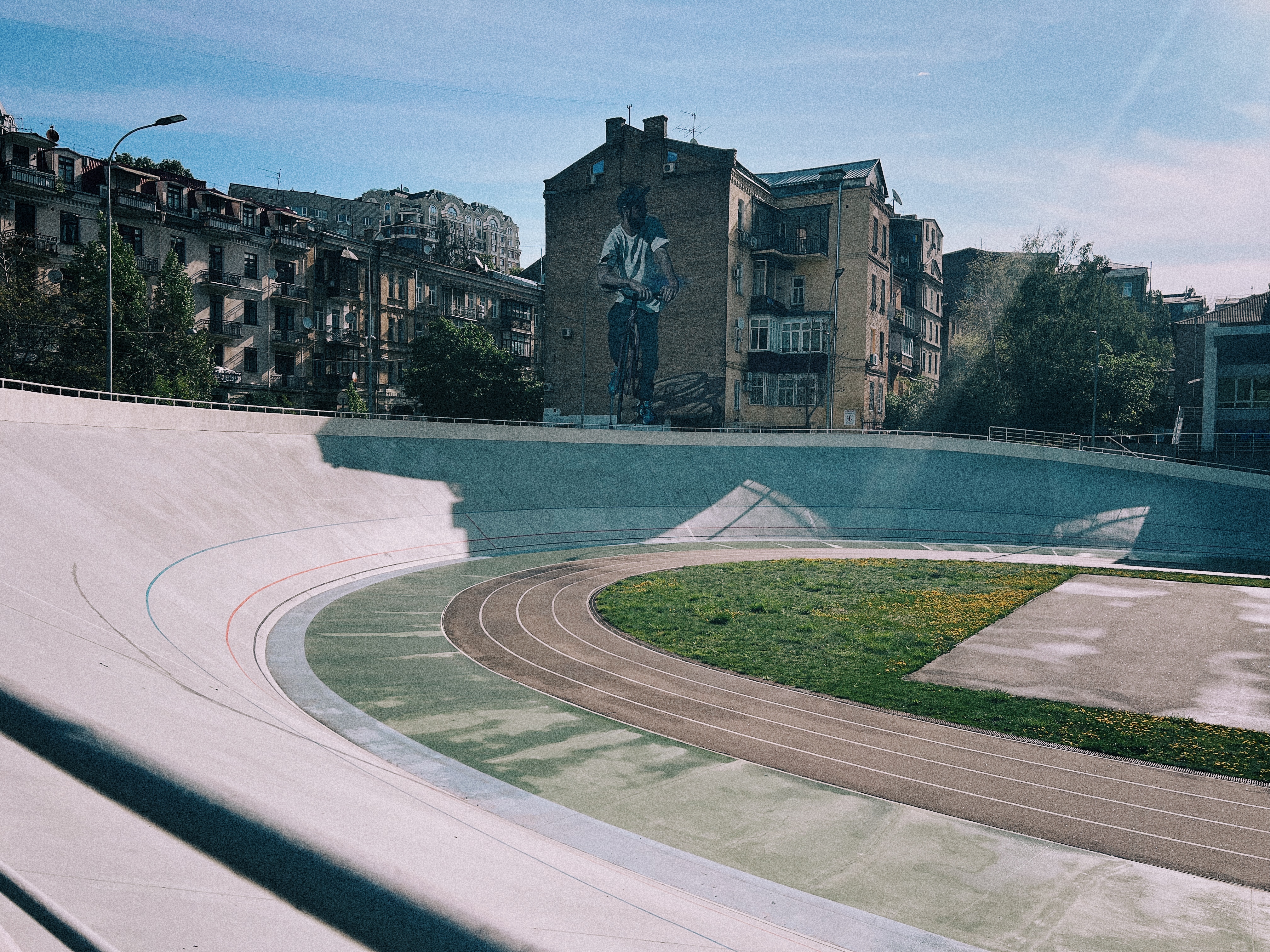
On the long train from Lviv to Kyiv, I did what I always do on long journeys: opened Strava and fell down a rabbit hole of cycling routes.
I found the Ukrainian cycling community. Men in their 20s and 30s — same age as me, same kit, same obsessive documentation of climbs and intervals. I followed a dozen of them. Traced their routes on the map. Added some to a list of roads I want to ride when peace returns.
Their ride logs are irregular. Weeks of nothing, then a cluster of activities, then nothing again. Brief rotations away from the front.
.jpg)
.jpg)
I had arrived through Poland the night before, on a budget airliner — the kind built for stag weekends and cheap sun. Patriot systems visible on the tarmac, military equipment waiting for transfer. The scale of what it takes to keep a country fighting, laid out in hardware. The border crossing itself was mundane. Much faster than CDG. A stamp, and I was in.
.jpg)
.jpg)
.jpg)
.jpg)
Ukraine looks like Europe. Green fields, commercial strips, shops you'd recognise. That familiarity is what makes it hard to hold. Kyiv has great restaurants, great coffee, people going about their lives. During the day, the war is mostly invisible. At night it isn't. Air raid alerts become routine quickly. You learn the shelter locations, pack a bag before bed — clothes, battery, water — and sleep knowing you might be woken and moved underground. You carry on.
-2.jpg)
-2.jpg)
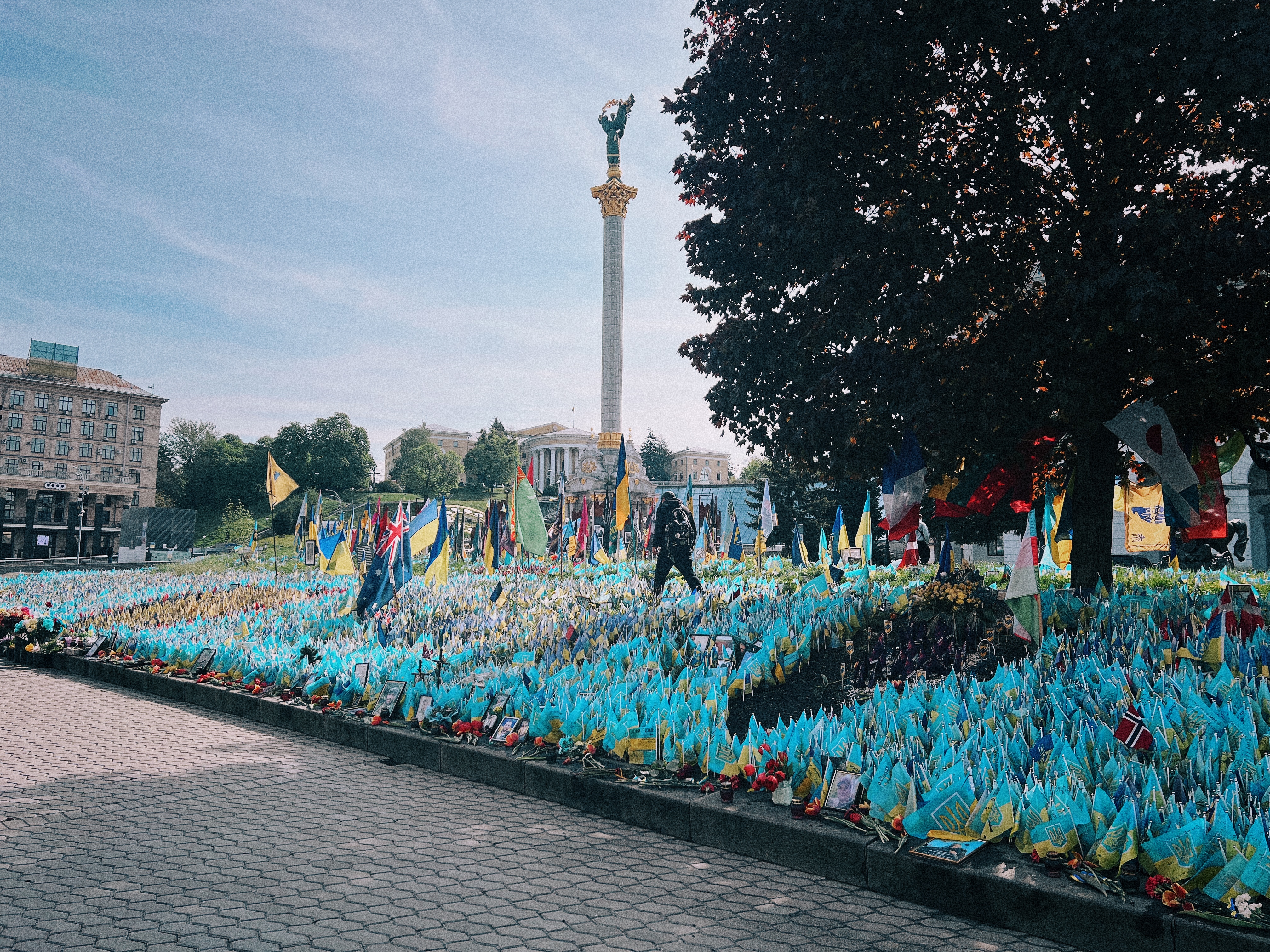
At Mykhailivska Square, captured Russian vehicles sit on public display. Trophies. Evidence. At Maïdan Nezalezhnosti, I stopped for a long time. I had followed the 2014 uprising online, watching it unfold tweet by tweet from a safe distance. Standing on that ground was something I hadn't anticipated emotionally. Thousands of small flags in the grass, each one a soldier. They move in the wind. The uprising I watched online wasn't a conclusion — it was a chapter.
The scars you don't see immediately are demographic. Walking the streets, something felt off before I could name it. Women, children, young adults everywhere — and fewer men in their 30s, 40s, 50s. A society-shaped hole where a generation of men would normally be. At the train station, I saw families sending soldiers back to the front. The air thick with a specific kind of love.
-2.jpg)
One image I won't lose: a young girl at the bottom of an escalator, watching her father ascend. She was old enough to understand what goodbye might mean here. She was physically sick from the weight of it, her mother holding a bag for her.
Recently, one of the cyclists I followed on Strava was killed in action. A fellow rider who won't ride again. A fellow father who won't come home to his daughter.
I carried back home some memories. The flags in the grass. The goodbyes on this escalator. The irregular ride logs that will eventually stop updating.